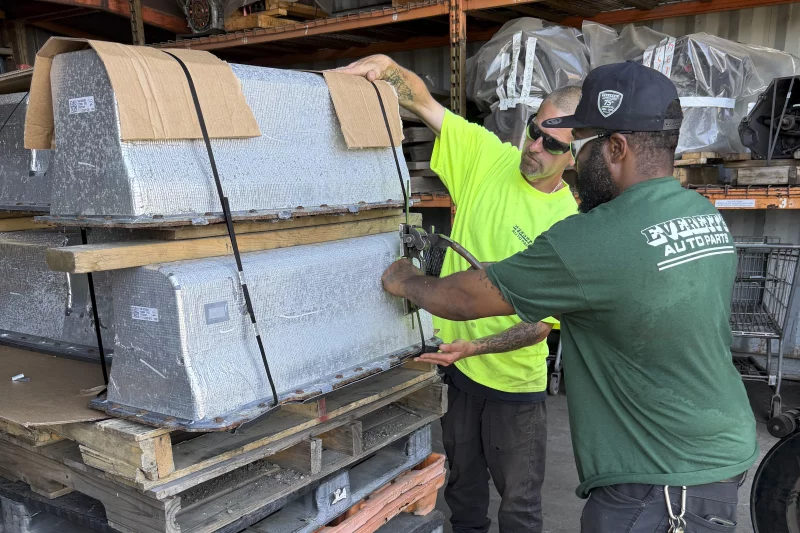
NPR’s article, “EV battery recycling has a math problem,” highlights the current realities automotive recycling facilities are facing when working with high voltage hybrid and electric vehicle batteries. Tom Andrade (Everett Auto Parts, MA), First VP and Treasurer of ARA, and long time ARA member Brian Bachand (Westover Salvage, MA) are featured in the article and discuss the difficulties in working with high voltage vehicle batteries and the economic challenges associated with finding responsible end markets.
ARA appreciates NPR shining a light on a problem our members confront every day: batteries that are hypothetically valuable but, in practice, can carry a substantial negative cost to recycle responsibly. This dynamic is only expected to intensify as more end-of-life EVs reach salvage yards and as manufacturers shift toward lower-value LFP chemistries that recyclers are reluctant to accept without a gate fee. Professional automotive recyclers are the front line of responsible end-of-life vehicle management, but they cannot be left to absorb the cost of stranded batteries alone — a situation that pushes material toward landfills or unsafe overseas processing. ARA believes the answer lies in well-designed producer responsibility frameworks and access to state of health and state of charge data. By giving automotive recyclers, repairers, repurposers, and recyclers the ability to safely evaluate and transport batteries, existing automotive recycling infrastructure will be allowed to promote environmental and economic principles of highest and best use. ARA was proud to contribute to the drafting of Colorado’s propulsion battery stewardship law, which reflects this framework, and we view it as a model other states can build on to ensure these batteries become resources rather than liabilities.